Introduction
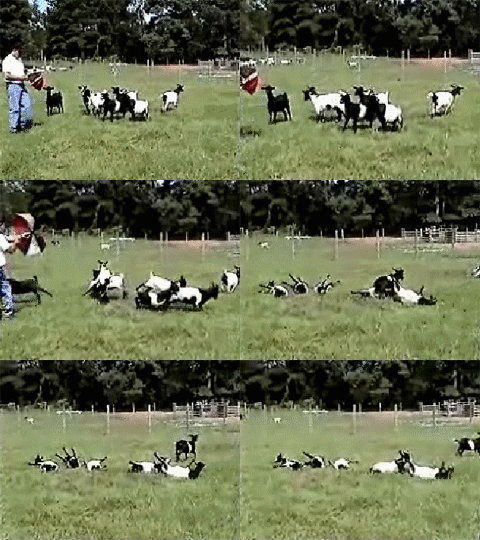
The “fainting goats” video on YouTube has been watched millions of times. Actually, those poor goats did not lose consciousness; they got a disease called myotonia.
This hereditary disease is characterized by difficulty in relaxing muscles after an initiation of movement. Genetic defects are shown within the muscle tissue itself, the nervous system is considered to be unaffected. It means that patients are perfectly normal until typical stimuli triggering clinical symptoms.
An example is shown by the video clip. Skeletal muscles stiffened up when the goats were startled (excited). The stiffness lasted for a while that made the goats fall on the ground.
Myotonia was first described in human in the late 19th century. After more than a hundred years, a variety of types have been delineated: partly because of differences in the cause or symptoms. Also, myotonia has been found to affect animals, such as goats, horses and dogs.
Generally, the disease is rare. Becker-type myotonia, the commonest form, has a frequency between 1:23,000 and 1:15,000. Well investigated types also include Thomsen’s disease, paramyotonia, and K+-aggravated myotonia.
Image courtesy of https://www.flickr.com/photos/theshecreature/29725873/sizes/o/ under a creative common license.